EL ALI (Arabic)       EL CALI (Somali)       SHIID-BIROOD (local name)
Ali's Well           Ali's Well           Iron Rock
     

The Meteorite and its Impact Site, National Treasures of Somalia,
Proposed as a UNESCO Cultural & Natural Heritage Tentative Site.

The 15,150 kg, type IAB, IRON METEORITE.
Radionuclide impact dates range from 2,000 to 3,000 and 60,000 to 30,000 years ago.

An URGENT preview of our upcoming publications.
Updated 2026.01.10
Copyright © 2020-2025 by N. Gessler on behalf of the contributors

HOW METEORITES WERE MINED for METAL
in SOMALIA and GREENLAND
Independent invention 10,000 kilometers apart


The Sordid Mystery of a Somalian Meteorite Smuggled to China. 22 September 2025

Somalia’s lost meteorite: How a cosmic treasure vanished to China. 22 September 2022


CAPE YORK

provides homologous proof of SHIID BIROOD'S
world cultural and natural heritage significance.

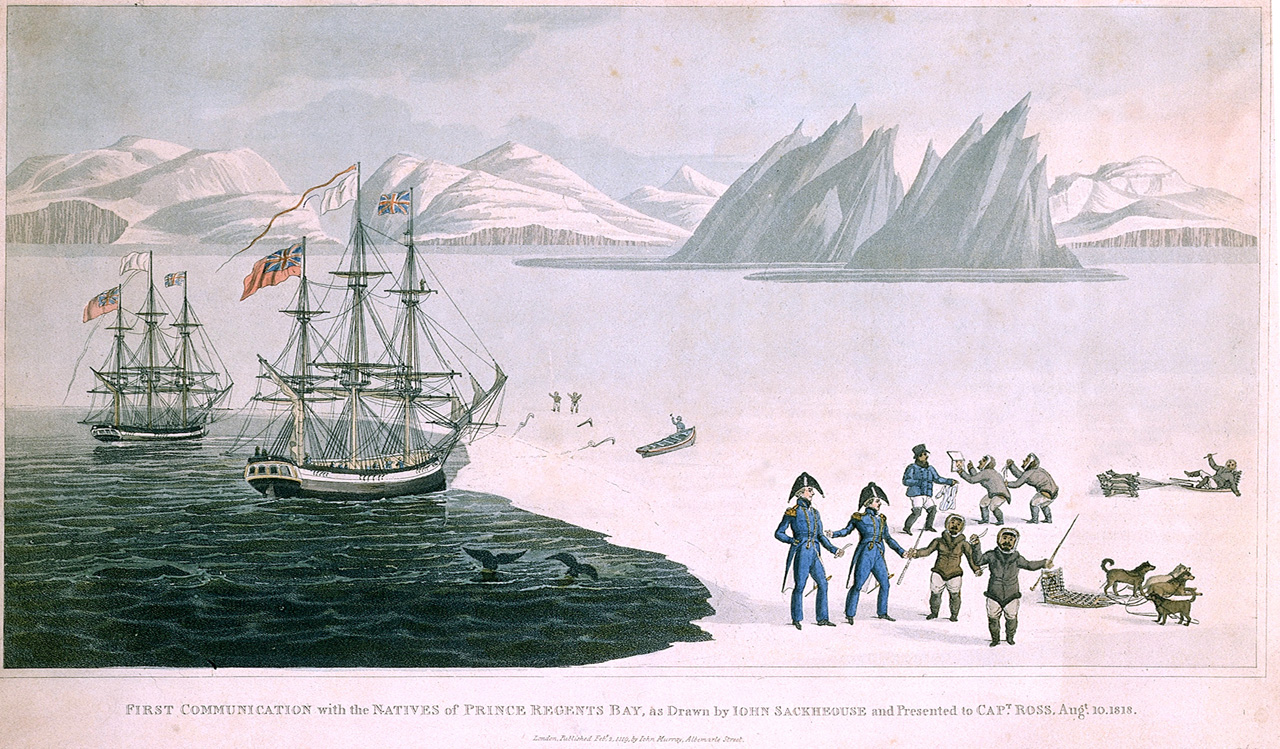
The year was 1818: on the ice at CAPE YORK, GREENLAND.


Capts. John Ross, William Parry and Science Officer Edward Sabine met the Inuit Eskimos in 1818.
They recorded in their journals how the Inuit made their tools from iron meteorites.
Painting by Inuit interpreter John Sacheuse. (Courtesy of the Royal Museum Greenwich, pending)


Iron was frequently used, when it was available, to make cutting tools, knives, spear points and harpoons.

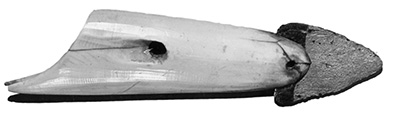
Knife blades and points set in bone from Cape York in 1818. The metal inserts average 5 grams.
(Courtesy of Denmark Geological Museum, used with permission.)


Proposal for a diarama at the American Museum of Natural History (from Peary)


Capt. William Parry wrote about their encounter with the Eskimos and how they mined iron from Cape York in 1818.

William Parry's complete account (pending).           John Ross' complete account.(pending)


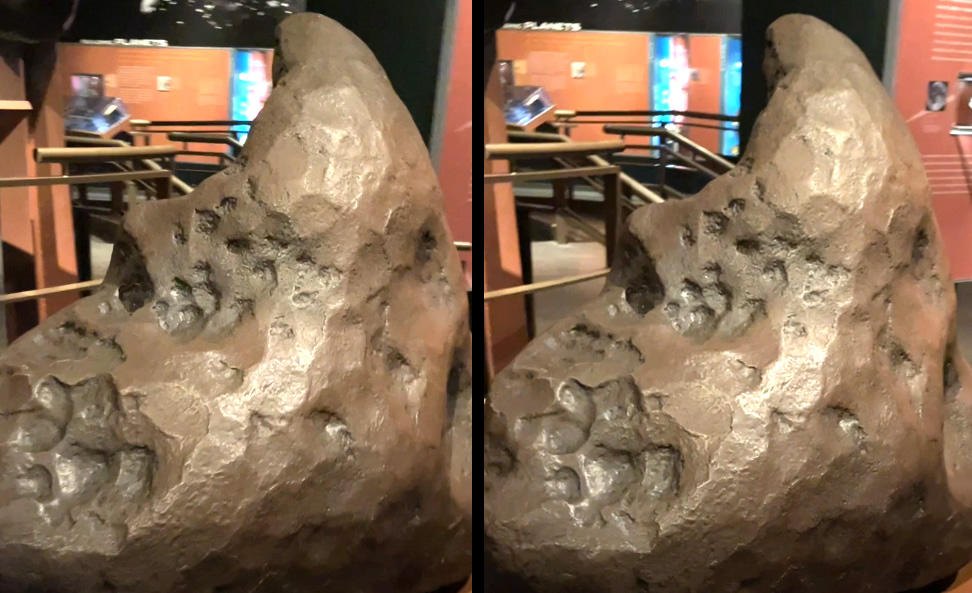
The top hammer-worked side of the 3 ton Cape York "Woman" at the American Museum of Natural History in New York.
Note the hundreds of facets of plastic flow from Inuit hammering and the metal lips (see arrows) formed at their edges.
The two intersecting facets at the top were hammered together to produce a ridge for removal.
The hammer-marks are absent on the back which was inaccessible.
Photo courtesy of AMNH, contrast enhanced..

These meteorites have never been photographed in detail, photogrammetrically captured, laser scanned or reproduced as a 3D digital model.
In lieu of a full volumetric model, we are limited to working with original photogaphic plates, negatives or prints.


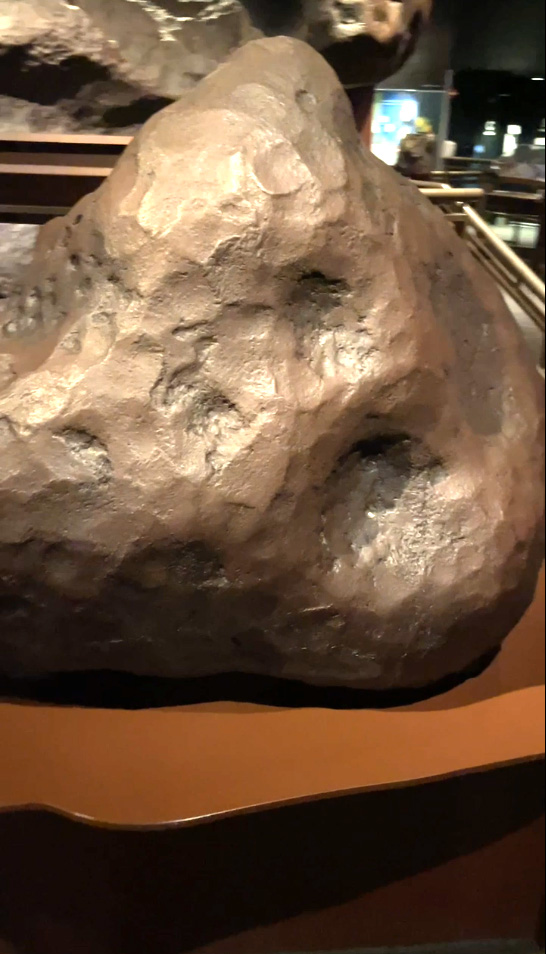
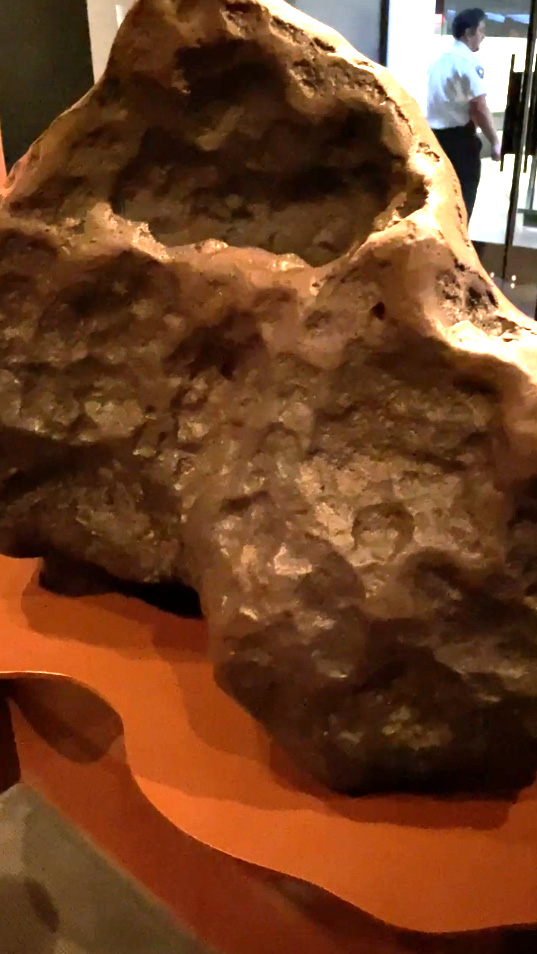
Cape York Woman, videos of front and back. Courtesy of Denton Ebel and Steven Jaret, American Museum of Natural History.
Note that the back of the meteorite, which was inaccessible to the Inuit, appears not to have been hammered.
Video tracking shots give you a feel for the surface details of hammering.


Now, lets look at some Stereo pairs made from the frames in the various videos
to understand the surface details of hammering and appreciate he plastic flow...:


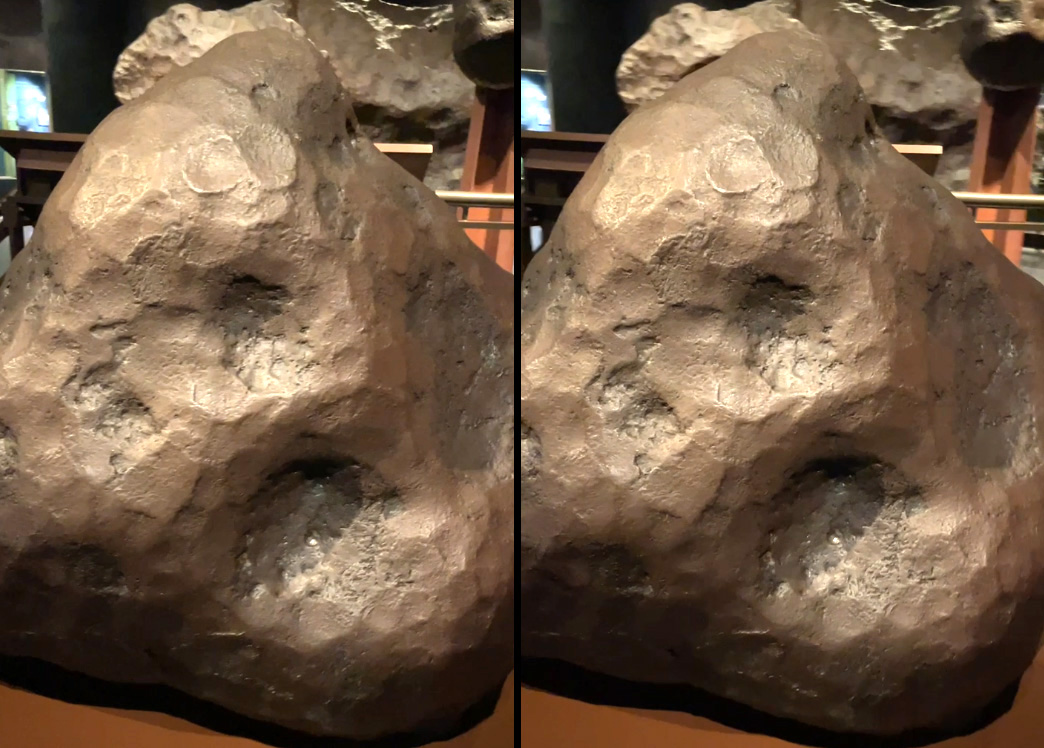
Cross your eyes until you see two pairs of images. Then fuse the overlapping pair together.
As the central images overlalp and fuse, you see in 3D stereo!
How to view a cross-eyed 3D stereo pair
Practice makes perfect and it is free. Easier than 3D glasses and much cheaper than a stereoscope.


Stereo 3D anaglyph.


Cape York Woman stereo pair of the front. Courtesy of Denton Ebel and Steven Jaret, American Museum of Natural History.

Cape York Woman stereo anaglyph of the front. Courtesy of Denton Ebel and Steven Jaret, American Museum of Natural History.anaglyph.


Cape York Woman stereo pair of the left side. Courtesy of Denton Ebel and Steven Jaret, American Museum of Natural History.
By now you can identify the concave, conves and flat facets, and lips of plastic flow.

Cape York Woman stereo anaglyph of the left side. Courtesy of Denton Ebel and Steven Jaret, American Museum of Natural History.


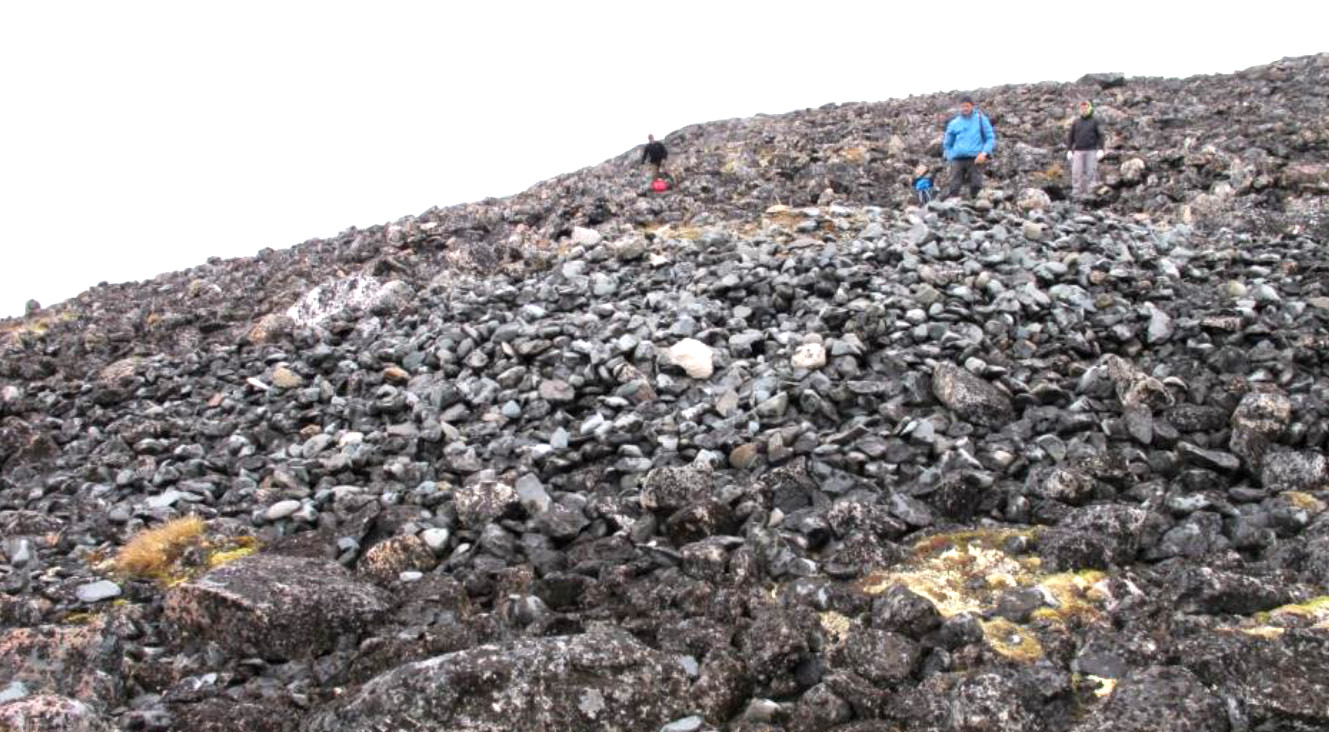
Figure 16: Sixty-eight tons of cobbles used as hammerstones cobbles at the original Cape York site of "Woman" (by Jens Fog Jensent, used with permission.)
From THE CULTURAL HISTORY OF THE INNAANGANEQ METEORITE 2014.
In Somalia, the stratum containing hammerstones is buried under soil.


The "Woman" meteorite in situ looking towards the sea. (from Peary)


The Cape York "Woman" at the American Museum of Natural History in New York.
Photo courtesy of Mikkel Myrop, the first researcher to publish on the lips (see arrows) formed by plastic flow in 2014.


The Cape York "Dog" at the American Museum of Natural History in New York.
As one mines metal from a meteoritic or iron mass, it becomes less irregular and more spherical.
Perhaps the 'Dog" is near the end of its usefulness as a source of metal. Arrows show lips of plastic flow.
Photo contrast enhanced, courtesy of AMNH.

These meteorites have never been photographed in detail, photogrammetrically captured, laser scanned or reproduced as a 3D digital model.
In lieu of a full volumetric model, we are limited to working with original photogaphic plates, negatives or prints.


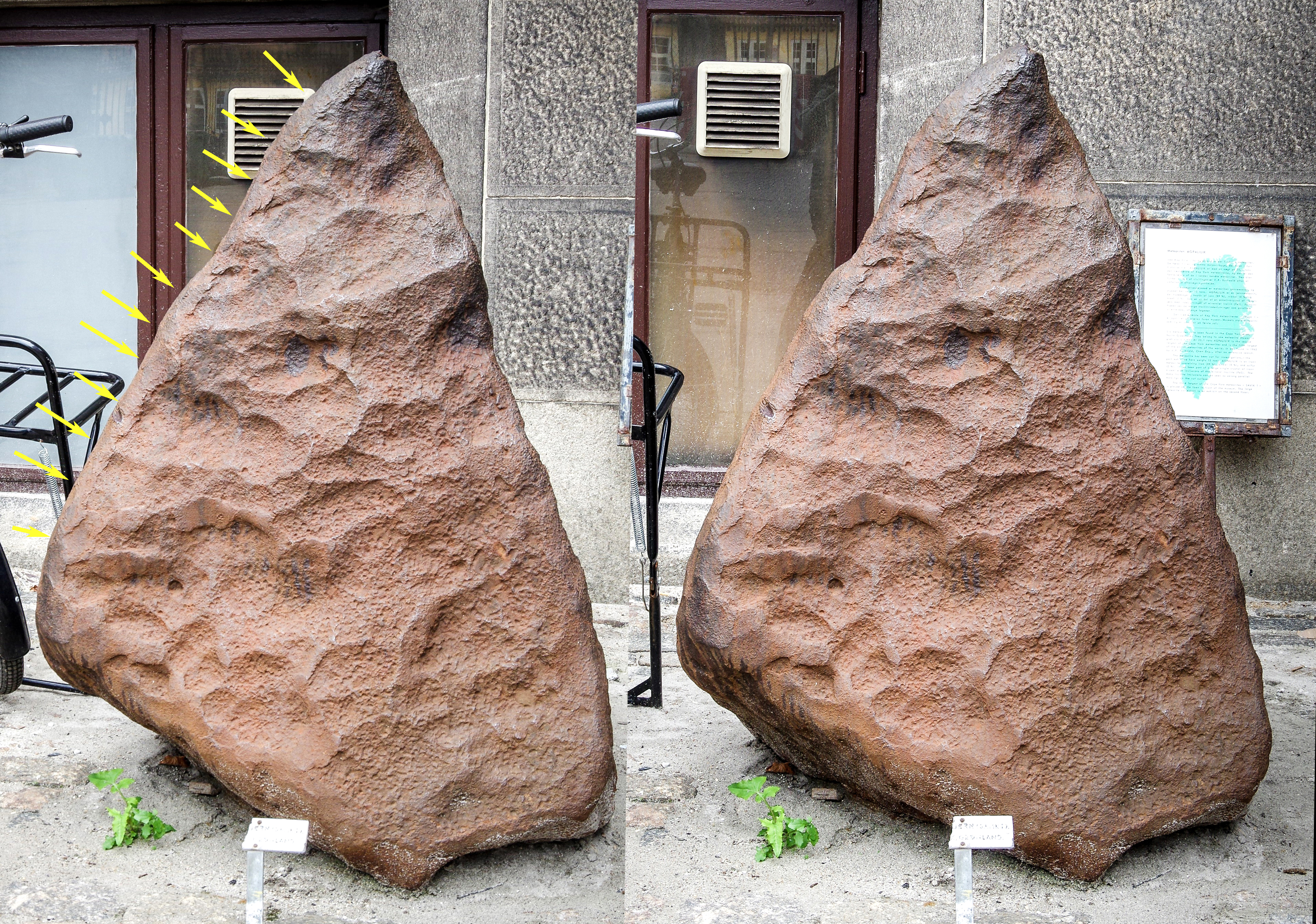
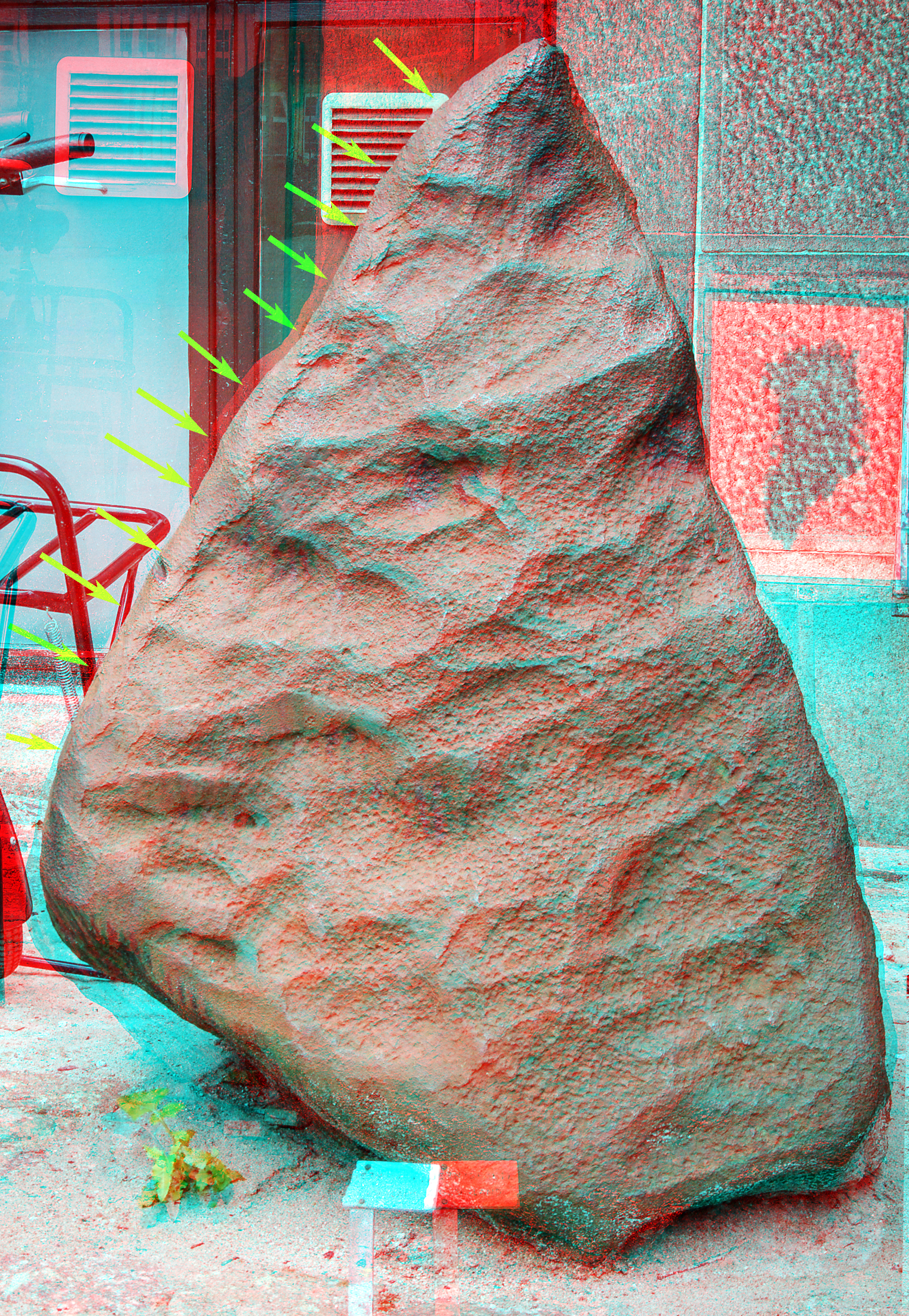
Savik I, at the Copenhagen National Museum (stereo pair assembled by N. Gessler).
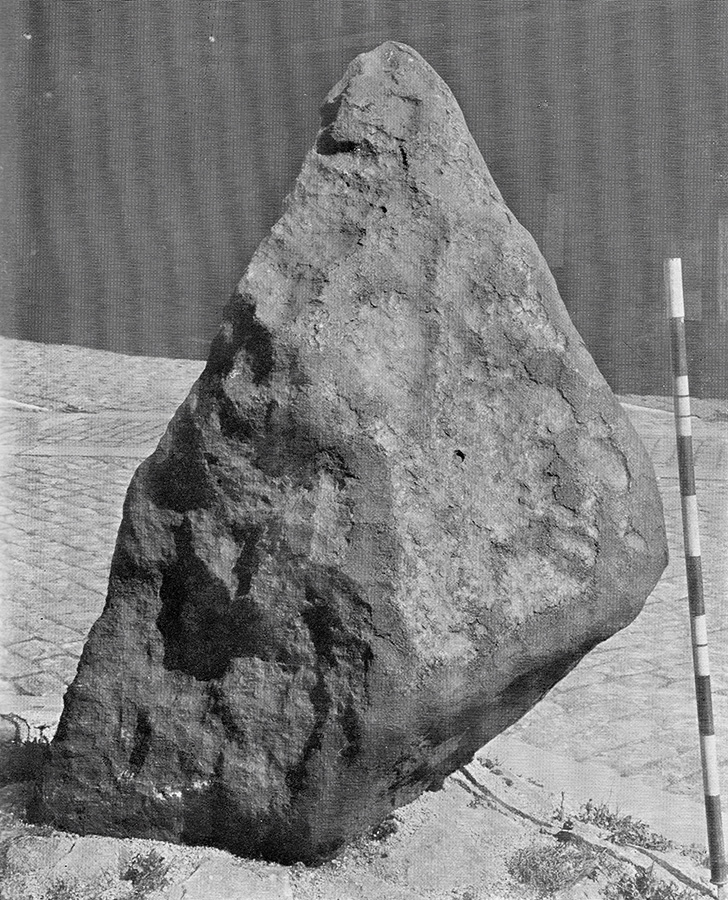
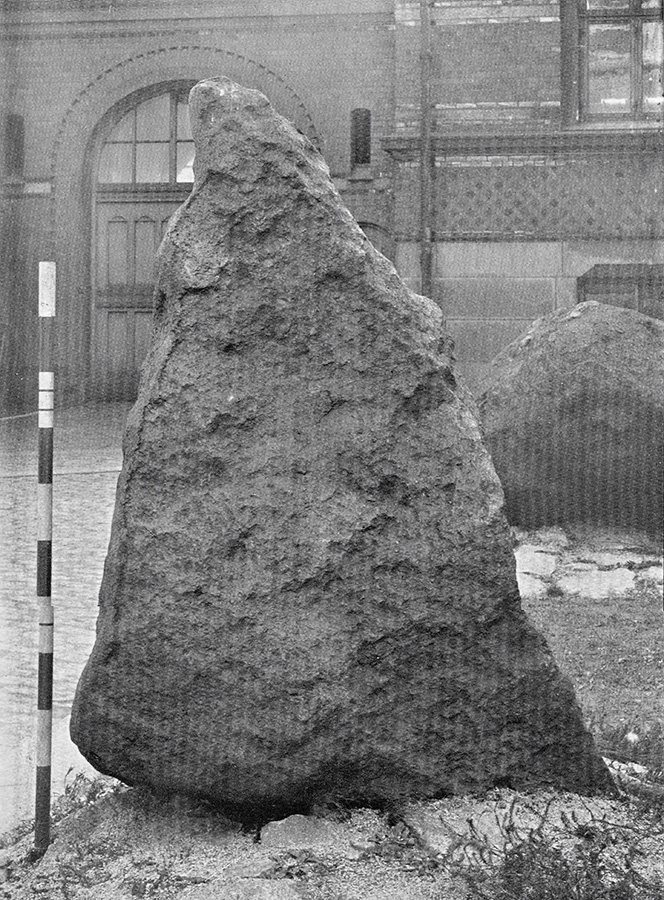
About 156 cm high, note the bands of plastic flow and protruding lips (see arrows) along the left edge.

These meteorites have never been photographed in detail, photogrammetrically captured, laser scanned or reproduced as a 3D digital model.
In lieu of a full volumetric model, we are limited to working with original photogaphic plates, negatives or prints.


Savik I: Red / Cyan anaglyph.


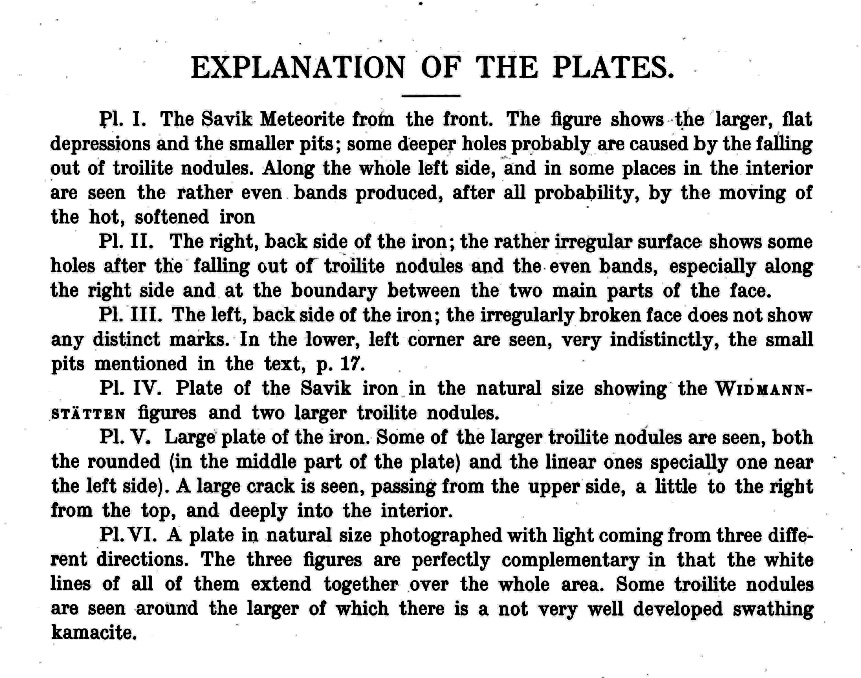
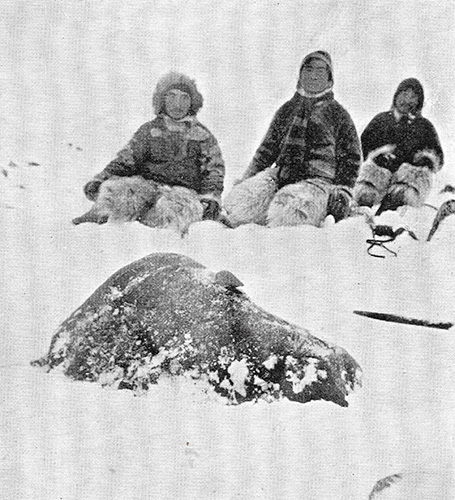
Figure 1: Top peeking out of the snow as found, indicating the in situ orientation of the meteorite, and attesting to which sides of the meteorite would have been available to the Inuit for mining. The visible hump appears to correspond to the broad hump seen protruding at the left side of Plate I, the right side of Plate II, and hidden in Plate III. ,

This meteorite has never been photographed in detail, photogrammetrically captured, laser scanned or reproduced as a 3D digital model. In lieu of a volumetric model, recovering the original photogaphic plates, negatives or prints would be helpful.


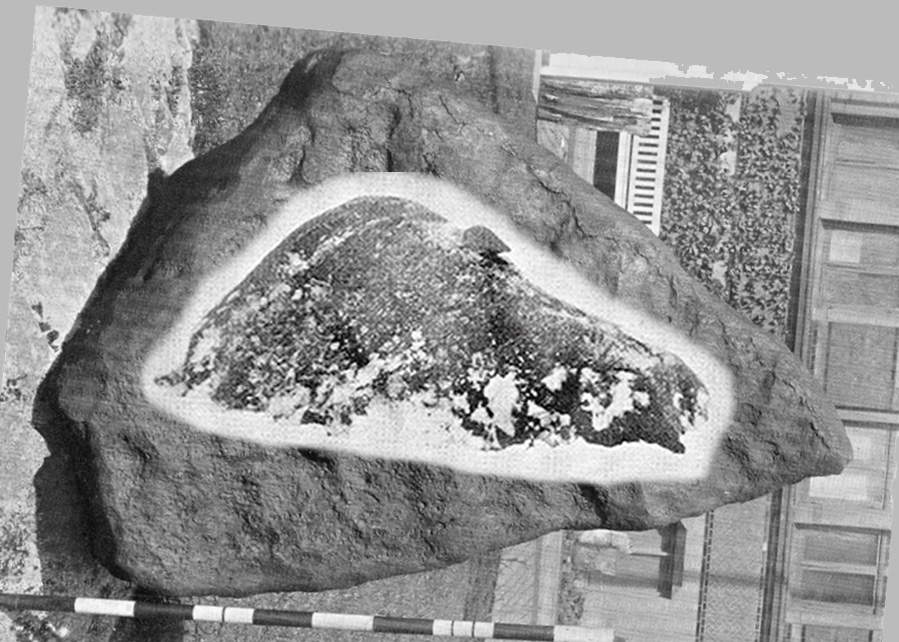
Plate I. "The front" with 10cm marked rod. At the Royal Dock Yard the base was cut. Referring to the hammering plastic flow lips along the left edge. The author incorrectly writes, "Alomg the left side, and in some places in the interior are seen the rather even bands produced, after all probability, by the moving of the hot softened iron." No, in all probability, the "bands" are hammered regions of intense plastic flow created by the Inuit in order to remove metal flakes.


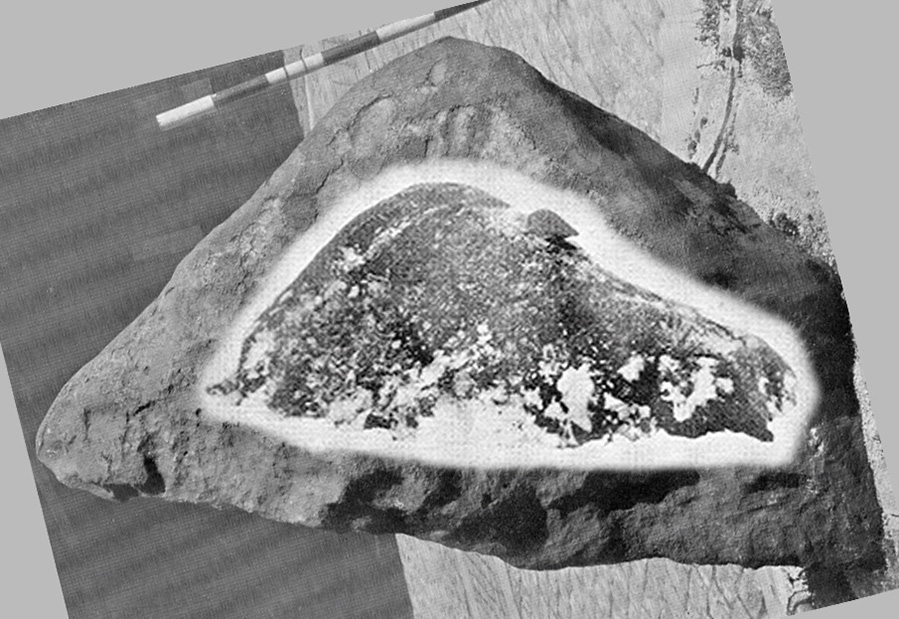
Plate II. "The right back side" with 10cm marked rod. At the Royal Dock Yard the base was cut. Hammering plastic flow lips at right edge, the left portion of the surface was the bottom of the meteorite, downwared and inaccessible to the Inuit.


Plate III. "The left back side" with 10cm market rod. At the Royal Dock Yard the base was cut. Hammering plastic flow lips are visible along the left edge, but the majority of this surface was the bottom of the meteorite, downward and inaccessible to the Inuit....


Plate I has been rotated to show its correct in situ orientation. We have turned Plate I to align it with the photo in the snow seen in Figure 1.
Plate II appears to be the better fit and confirmes the bands of hammering as downward and above ground.
The width is about 156 cm.


Plate II has been rotated to show its correct in situ orientation. We have turned Plate II to align it with the photo in the snow seen in Figure 1.
Plate II appears to be the better fit and confirmes the bands of hammering as downward and above ground.
The width is about 156 cm.

These meteorites have never been photographed in detail, photogrammetrically captured, laser scanned or reproduced as a 3D digital model.
In lieu of a full volumetric model, we are limited to working with original photogaphic plates, negatives or prints.


Figure 41: Ten tons of basalt cobble hammerstones at the original site of Cape York "Savik I."
From THE CULTURAL HISTORY OF THE INNAANGANEQ METEORITE 2014.
(photo by Martin Appelt, used with permission.)
In Somalia, the strategrahic layer of hammerstones is buried.


Savik I, Tipped upward and among the flowers in Copenhagen, and not in situ at its original location in Greenland.
Note the vertical strip or plastic flow band of hammering at the center, producing lips (see arrows) better seen in Plates I, II and III above.
A sample was taken from the circled hammered area. Its cross-section should show plastic flow.
Where is it now? (from Buchwald)


Adapted from Fogire 14: Settlement pattern around the meteorites "Woman" and "Dog."
From THE CULTURAL HISTORY OF THE INNAANGANEQ METEORITE 2014.
Courtesy of Mikkel Myrup, used with permission.


Adapted from Figure 09: Late Dorset/Tunit (7th to 8th century CE) archaeological sites with meteoric iron.
From THE CULTURAL HISTORY OF THE INNAANGANEQ METEORITE 2014.
Trade reached more than 1,000 km. Courtesy of Martin Appelt, used with permission..


Figure 11: Trade in meteoric iron reached mor than 2,000 km following the arrival of the Inuit in the 11th century AD.
From THE CULTURAL HISTORY OF THE INNAANGANEQ METEORITE 2014.
Courtesy of Martin Appelt, et al, used with permission.
How far might trade from Shiid Birood have extended 2,000 km from El Ali / Ceel Cali?


Ovifak was also mined for metal by the Inuit Eskimos. (photo from Buchwald)
Ovifak was actually terrestrial iron which is rarer than meteoritic iron.

This terrestrial iron has never been photographed in detail, photogrammetrically captured, laser scanned or reproduced as a 3D digital model.
In lieu of a full volumetric model, we are limited to working with original photogaphic plates, negatives or prints.


Ovifak, displayed at the Museum of Copenhagen.


We see the SAME FEATURES on SHIID BIROOD in Ceel Cali / El Ali:

Perhaps metal from SHIID BIROOD was traded far and wide...

2375 BCE: EGYPT 4,400 “[The king] Unis seizes the sky and splits its iron.”,
was Inscribed in hieroglyphs in a pyramid.

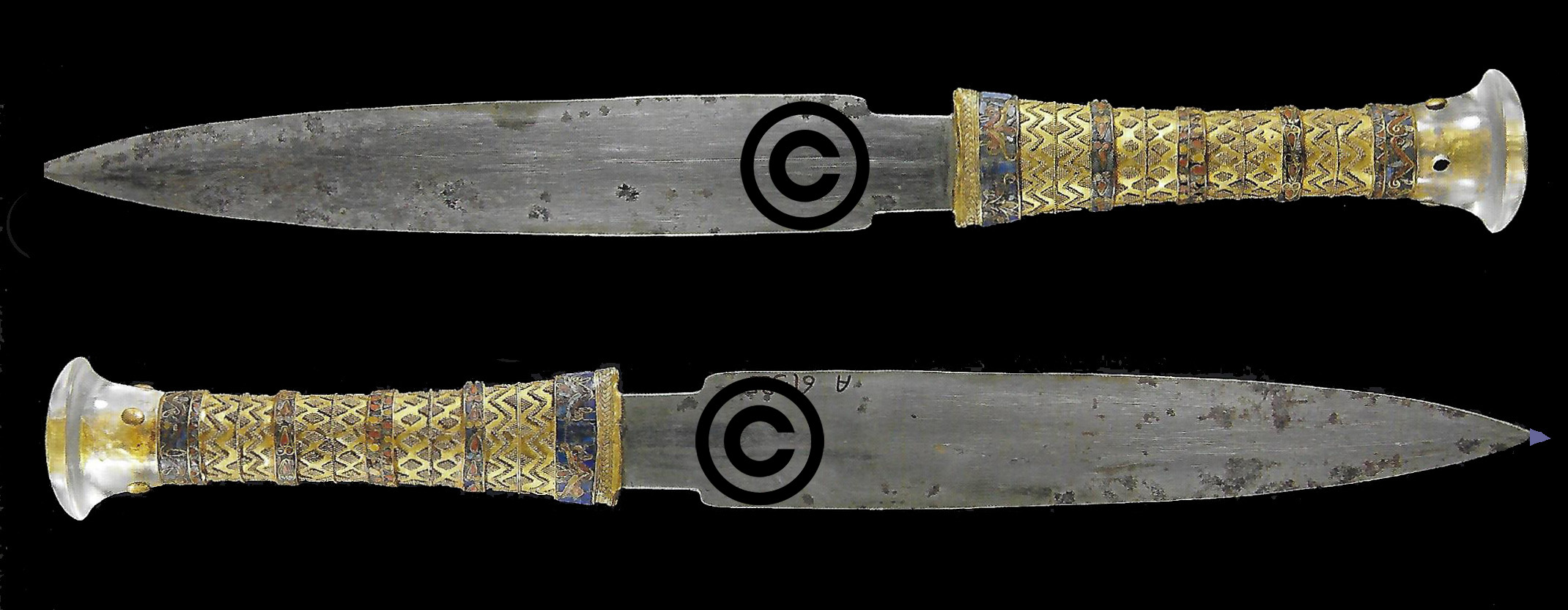
1275 BCE: Tutankhamun's Tomb countained 19 items of meteoritic iron:

Source IRON FROM TUTANKHAMUN'S TOMB, Permision pending from American University in Cairo Press.

Iron amulet in the shape of Wedjat-eye on a gold bracelet.

Miniature 4 x 5 cm iron head rest.

Six precision iron chisels typical of the boxed set of 16 found.

Both sides of an iron, gold and quartz crystal dagger 34 cm long.

These objects have been characterized by XRF, but more precise analyses are needed to identify a source, such as
Induced Neutron Activtion Analysis (INAA) and Inductively Coupled Plasma Mass Spectrometry (CP-MS).

1325-1354 CE: Ibn Battuta, in his TRAVELS IN ASIA AND AFRICA,
writes of his arrival in Konia, pp. 130-134."

The sultan of Birgi (in Turkey) shows Battuta an asteroid: "As we were sitting there, he said to me,
'Have you ever seen a stone that has fallen from the sky?' I replied, 'No, nor ever heard of one.'
'Well,' he said, 'a stone fell from the sky outside this town,' and thereupon called for it to be brought.
A great black stone was brought, very hard and with a glitter in it, I reckon it was about a hundredweight.
The sultan sent for stone breakers, and four of them came and struck it all together four times over
with iron hammers, but made no impression on it. I was amazed, and he ordered it to be
taken back to its place."


SHIID BIROOD

is a homologue of CAPE YORK


WHAT DOES "SHIID BIROOD" MEAN?

SHIID BIROOD is not only the name of the meteorite, but alsothe name of the place where
it was found, and/or also of the general general region. Depending on the context "Shiid Birood"
can also mean a noun: iron rock, iron ore, or iron bearing rock, and/or a verb or noun related
to a sharpening stone, whetstone, grinding stone or honing stone, and more recent use as an anvil.


WHERE EXACTLY IS SHIID BIROOD?

Those who visit the site with a Cell Phone or a GPS device may lose their lives to Al Shabaab.

The GPS coordinates listed in the Meteoriticcal Bulletin are only an estimate based on narrative
accounts. They have been copied by MinDat and other websites without on the ground confirmation.
We need coordinates taken at the site and confirmed by MAXAR satellite imagery
showing the site before, during and after Shiid Birood's removal.

We may be able to recreate the impact site by matching vegetation and meteorite features taken from
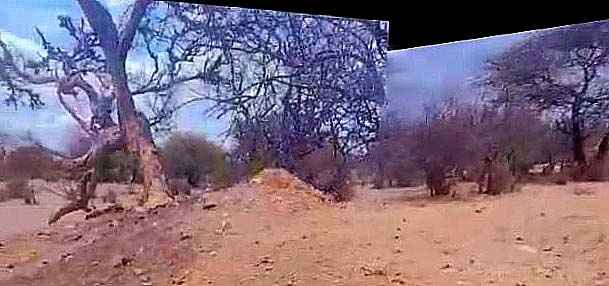
single images and frames stacked and merged from videos CV13 and CV14 with PhotoShop.


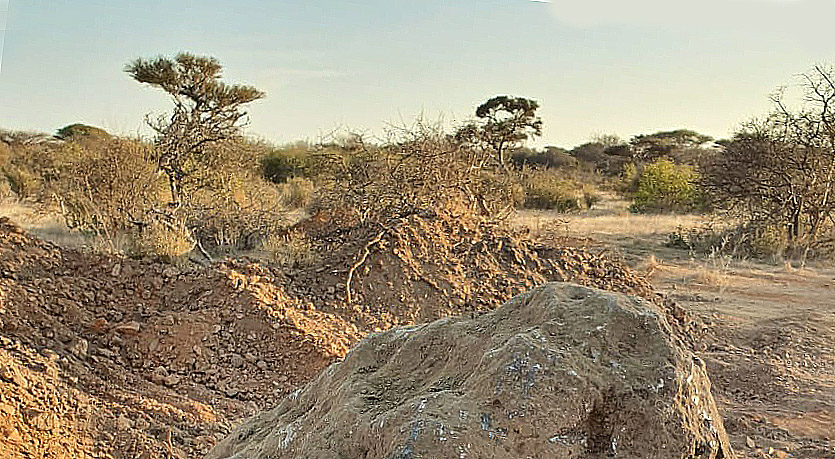
The meteorite in the foreground. Is that a dirt road at the right? Image H.


The meteorite in the foreground, and a clearing behind it. People seen at far fight. Picture 2, Image B.


The meteorite in the foreground, and a clearing, devoid of vegetation behind it. Picture 6, Image E.


The site after the meteorite's removal, one familiar tree and a clearing in the bckground. Assembled from CV 13 and CV 14.

1:100,000 scale topographic maps are available from 1979 & 1992 which show prominent and isolated stones.
We may be able to locate these stones on Google Earth and locate Shiid Birood more precisely with high resolution satellite imagery.

q

After months of seraching MAXAR satellite imagery, this may be a likely candidate. The ~1 meter object in 2016 may have upturned
the ~2 meters of disturbed soil in 2024. The area is well traveled as stories suggest. This will need to be confirmed by MAXAR.


WHEN DID SHIID BIROOD FIRST LAND ON EARTH"

~2,000-3,000 years ago, according to radiocarbon dating. Possibly ~30,000 to 60,000 years ago,
according to other radioisotopes. Dr. Tim Jull, quoted in the SCIENTIFIC AMERICAN op-ed report.

~2,000 years ago, was about 500 BCE, before Islamic times.

~40,000 year old hand axes were found on the rain-drenched slopes near Jalelo Hill, between Berbera
and Hargeisain, in 1896 by archaeologist Seton-Karr. They were similar to those found in
France and England. (Australian Museum A, B, Think Africa).

The impact was likely witnessed by any people in the area. The properties of
the unusual rock, its size, shape, hardness, sharpness, color and sheen whould have been
singular. On closer investigation, the heat or coldness of a touch, smell or taste, and the sound
it returned when it was struck would have been unique. It would have quickly become remembered
as a landmark, a place to meet, to recount stories and trade resurces. Its usefulness would have quickly
become apparent as the iron's ductility enabled edges to be sharpened and removed with rocks,
including basalt brought in from other places. It would become a focal point for settlement and
an ideal site representing the prehistory of the region.

HOW UNESCO MIGHT HELP RETURN THE METEORITE TO ITS IMPACT SITE (2025.10.31)

It has been suggested that Shiid Birood (the meteorite) may not be safe if returned to Shiid Birood (its impact site) or to Somalia at this time. Perhaps it may be better to have the meteorite housed in a responsible public institution, where it can be conserved, displayed, photographed, digitized and further documented, while Somalis orepares to receive it?

Here is a plan that may eventually result in Shiid Birood (the meteorite), eventually being returned to Shii Birood (its impact site). This would fulfill UNESCO's requirement that the object and the site comprise a a unified whole.

Some conservation steps may be taken at the impact site of Shiid Birood soon, to protect it from looting, and to conserve and restore it, as much as possible, to its original condition before it was removed in 2020. During this protection, conservation and restoration, we can learn much more about its history and prehistory, by studying those things closest to it, without any further destruction. This will help us prepare for a scientific archaeological escavation. (see Phase 6.)

Phase 1: Mapping using MAXAR satellite imagery. Establishing permanent control points on the ground for topographic and surface feature mapping.

Phase 2: Test excavations to characterize the stratigraphy in the hectare centering on the impact site: rate of soil accumulation
and/or depletion, evidence of floral, faunal and climate changes, radiocarbon dating of stratigraphic layers, etc. Since we know how far the meteorite was buried in the soil, that information may help us set some "older than" and "younger than" dates. 

Phase 3: Salvage archaeology of the disturbed stratigraphy could procede alongside of test excavations. We should establish two temporary storage areaa to be covered with geotechnical textiles, on which to place the disturbed back dirt, before and after processing. Processing should include careful screening in search of artifacts: hammerstones, metal fragments, and worked shell, wood and stone.  

Phase 4: Process all of the excavated soil, including the back-dirt and soil which had fallen back into the pit during removal, until that pit is cleaned of all
loose and disturbed materials. All the loose and disturbed soils should be screened and magnetically searched for artifacts as described above. Any metal fragments inset in bone or wood may provide important radiocarbon dates for the cultural mining-of-meteorites for metal. Soils, once processed, should be deposited on the second geotechnical textile.

Phase 5: Clean the walls of the excavated pit, and map, photograph and take samples of relevant features. Once cleaned, its walls may be consolidated, and then lined with another geotechnical textile, the pit refilled with the processed soil, and compacted.  During this refilling and compaction, consideration should be made for how the returned
meteorite will be placed, either partially buried in its original 2020 position, elevated to its position at the time of impact, or raised high so that its entire mass is visible.

Phase 6: Once the impact site is stabilized and the processed materials are evaluated, proceed with the design of an interpretaton center, physicl security, and consideration of a standard research archaeological excavation project using appropriate sampling techniques. Much of this work should be done with local indigenous, village, and urban Somali and invited international researchers.

Video 3: At the impact site, with the meteorite in situ before its removal, the videographer stands
still, pans, wanders around, and pans again. A composite is possible. 3D imagery is difficult.


Video 3: View of the grotto side. (hand compisite)
The surrounding rocks are not ancient hammerstones, but the result of a contemporary rock throwing game.


Video 3: View of the faceted side. (hand compisite)
The surrounding rocks are not ancient hammerstones, but the result of a contemporary rock throwing game.


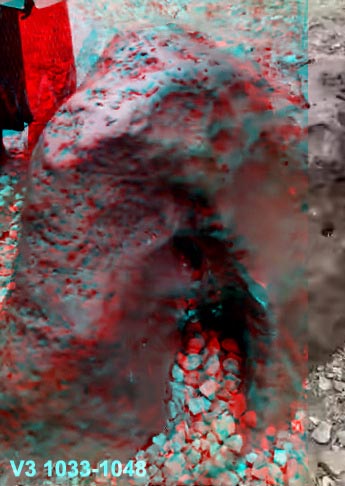
Video 3 frames 1033-1048 for cross-eyed viewing.

Video 3 frames 1033-10.48 as a red/cyan anaglyph.


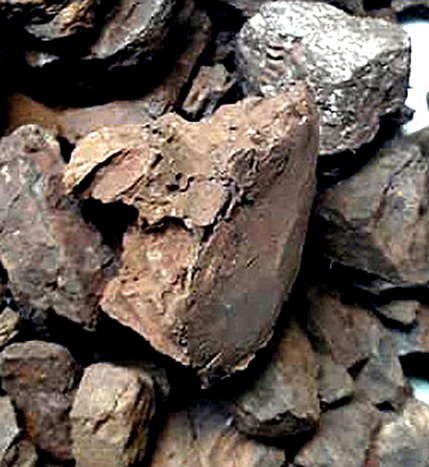
Among hammerstone fragments at the impact site, we see the top of a hammered metal flake, showing triple facet junctions.


Among hammerstone fragments at the impact site, we see a side view of the same hammered metal flake, showing triple facet junctions.


And we see basalt hammerstones.


Videos of debris from the removal of Shiid Birood showing hammerstones (Courtesy of Eng. Ali Egeh)
CV13, segment of CV13, and CV14


Photo 4 from Nur Hassan

The original image was intended to show the FreedomAirlines confirmation letteron the surface of the Shiid Birood meteorite.
In this modified image the document has been blocked out to clarify the meteorite's surface.
It has also been rotated to correctly orient the shadows and the brightness levels have been adjusted.
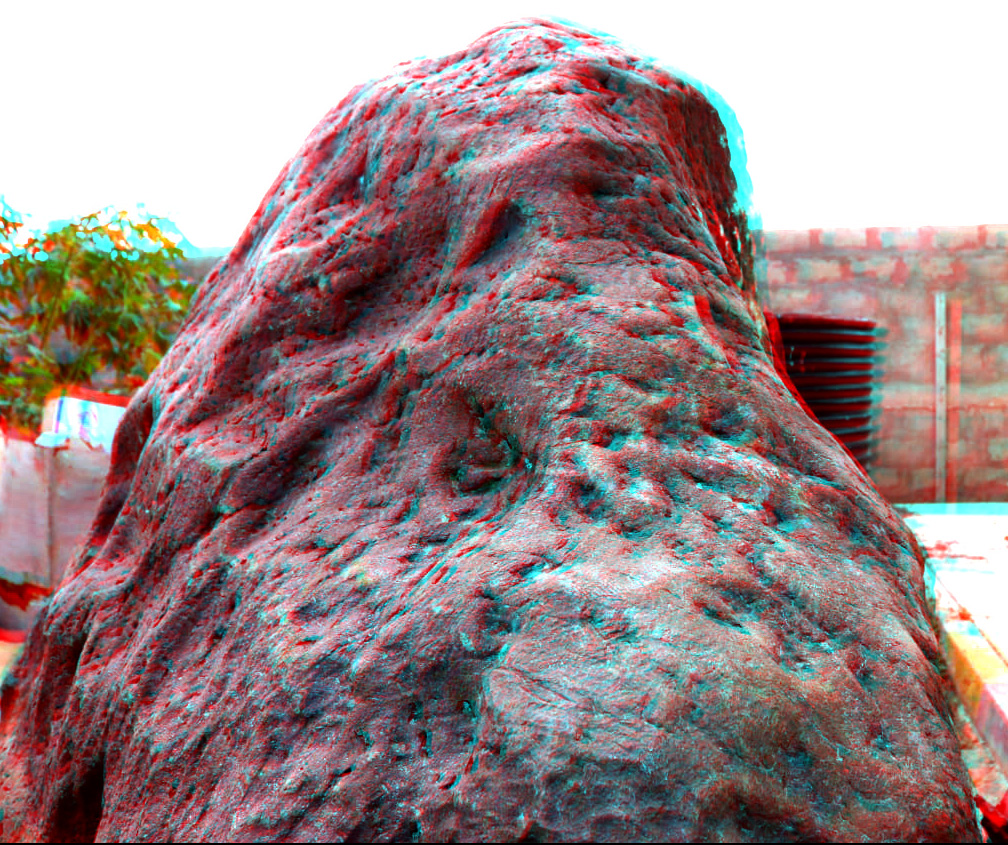
This is the most detailed close-up image that we have of the surface of Shiid Birood.
It provides clear evidence of the extensive and intensive cold-forging and back-smithing expertise and enterprise of the local peoples.
Prehistoricly, some three thousand years ago, they began a tool-making industry using the meteorite as both a source of metal and an anvil.
That cultural tradition of working iron into usefull implements, uncluding knife-making and knife-sharpening,
continued through the age of smelted iron until the present day.
Note what looks like clean sand trapped at the bottom left and in other pockets. Is it residue from having been sand blasted?.
Was this photo taken at the impact site of Shiid Birood? Or was it taken somewhere else in Mogadishu?


Video 6: The videographer stood still and panned back and forth,
preventing us from making stereo pairs. But we could fit the individual frames together,
like pieces in a jigsaw puzzle, to create this composite picture.


The number of folds, ridges, lips, curls and distortios are too many to count.
Note the lighter color where the stone was buried in the ground.
The marks of mining continue far beneath the level of the ground

Enlarge the photo and look at all the holes deformed to ovals by plastic flow.


This is an enlargment of the right edge of the jigsaw composite picture above. Sometimes the jigsaw pieces overlap.
Note the hundreds of lips and folds created, in parallel, by hammering downward and to the left.


This is an enlargement of individual frame #00416 from Video 6, verifying the parallel lips of plastic flow.


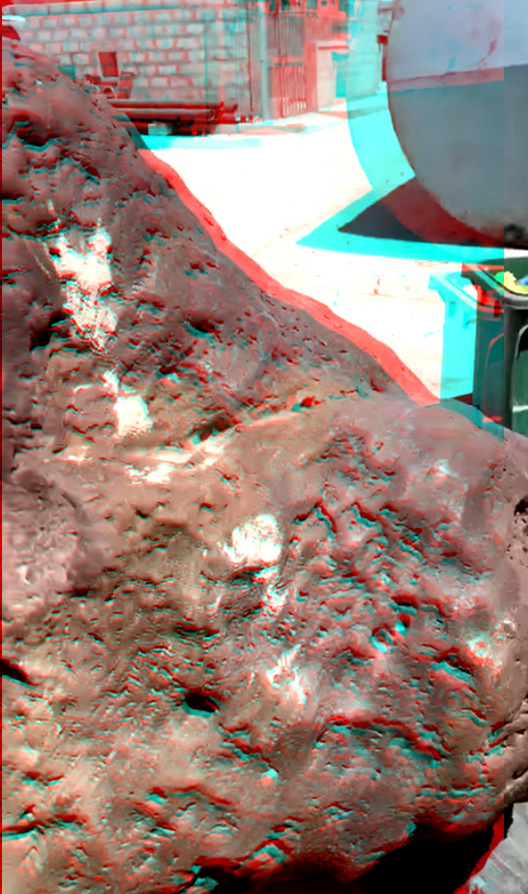
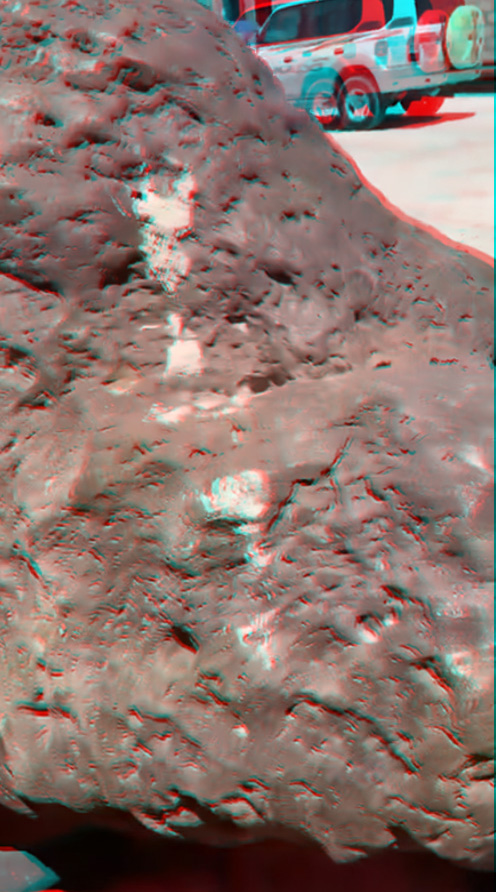
Stereo pairs provide a visual feel of the 3D surface revealing the plastic flow...:


Cross your eyes until you see two pairs of images. Fuse the central image of the overlapping pair.
How to view a cross-eyed 3D stereo pair.


Photo courtesy of Chris Herd, stereo anaglyph for cross-eyed viewing. Not much parallax, but some.

Photo courtesy of Chris Herd, stereo anaglyph, not much parallax, but some.


Video 4; The videographer moved around, back and forth, and over the meteorite, providing hundreds
of stereo pairs. However, he filmed at different scales and angles, making it difficult to align the images.


3D model rotatable in Meshroom, but not online. Point clouds were computed from 960 out of 1880 frames.


Video 4 frames 455 & 464 for cross-eyed viewing.

Video 4 frames 455 & 464 as a red/cyan anaglyph.


Video 4 frames 1701-1711 for cross-eyed viewing.

Video 4 frames 1701-1711 as a red/cyan anaglyph.


Video 4 stereo pair 1 for cross-eyed viewing.

Video 4 stereo pair 1 as a red/cyan anaglyph.


Video 4 stereo pair 4 for cross-eyed viewing.

Video 4 stereo pair 4 as a red/cyan anaglyph.


Video 4 stereo pair 5 for cross-eyed viewing.

Video 4 stereo pair 5 as a red/cyan anaglyph.


Video 4 stereo pair 6 for cross-eyed viewing.

Video 4 stereo pair 6 as a red/cyan anaglyph.


Video 4 stereo pair 7 for cross-eyed viewing.

Video 4 stereo pair 7 as a red/cyan anaglyph.


Video 4 stereo pair 8 for cross-eyed viewing.

Video 4 stereo pair 8 as a red/cyan anaglyph.


Video 4 stereo pair 9 for cross-eyed viewing.

Video 4 stereo pair 9 as a red/cyan anaglyph.


More evidence on how to remove coin-sized flakes of metal from massive irons.

CV4

Watch this video closely as the camera moves over and around the meteorite. The frames provide perspective from which 3D images may be made. You will witness hundreds of lips of plastic flow.

Look at the soil stain which covered the hammer marks made thousads of years ago.

Translation

Meshroom: 960 frames, every 3rd frame.

CV6


The video to the left makes two pans over EL ALI.
Look at how many lips of plastic flow you see.

Like solving a huge jig-saw puzzle, we put the frames together into one large image to the right.

Ancient smiths moved metal to the edges forming lip, or ridges to be broken off and used as cutting blades..


Today, we spend millions annually to discover and prevent METAL FATIGUE
in our tools, autos, aircraft, railroad wheels and tracks, and other manufactures.
Our ancestors found innovativwe ways to encourage metal fatigue in order to survive.


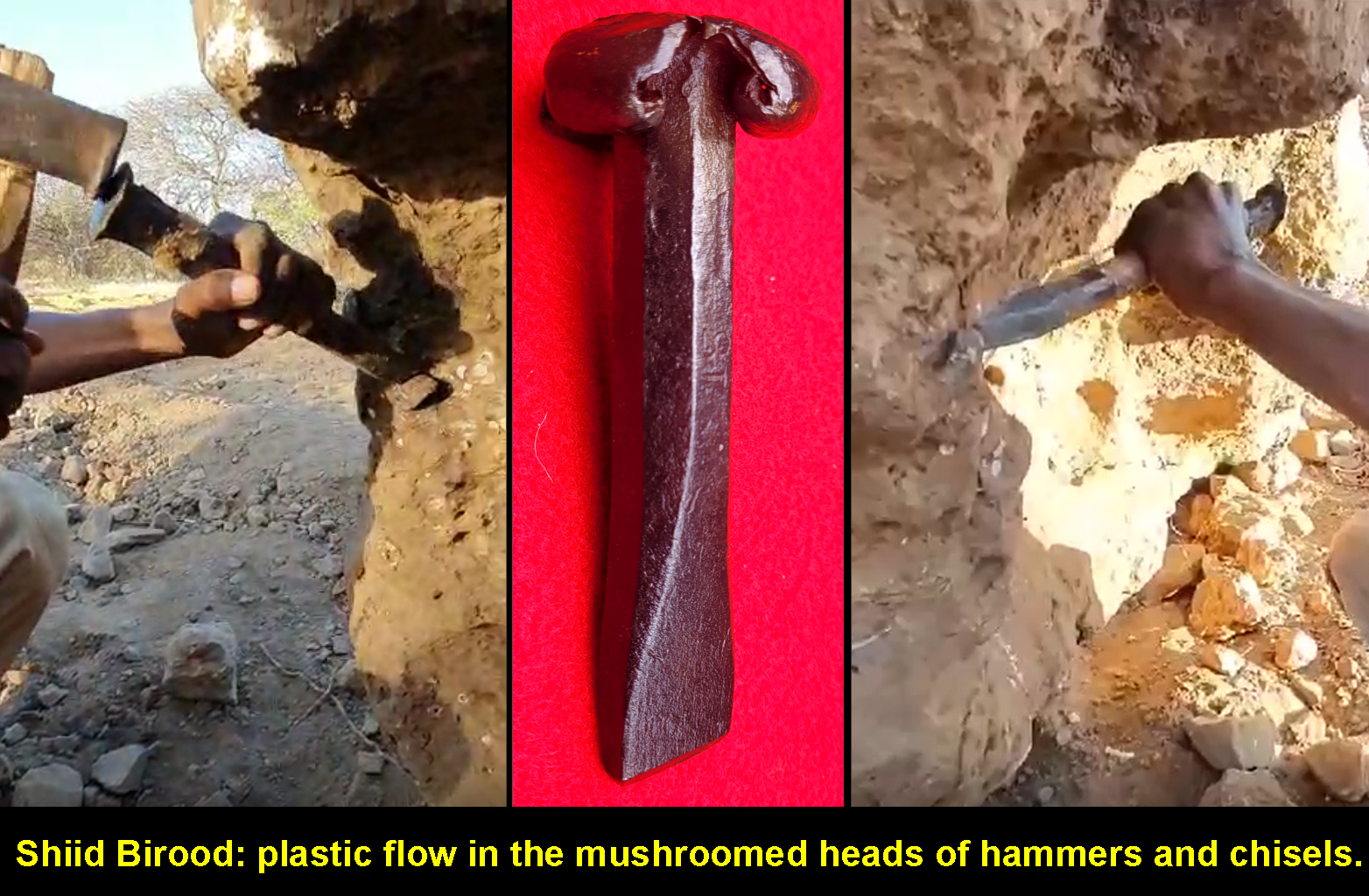
In today's workshops, we see the evidence of plastic flow in the mushroomed heads on well used cold chisels and hammers.
The flakes and curls on the mushroomed heads of toola, and the Cape York flakes and blades, each average the same 5 grams.


CV1-TranslationCV17-Translation

The hammerer, removing a sample, is using the same techniques as did the prehistoric miners of Shiid Birood.


Iron meteorites have a "3-D structure [that] is made of numerous flat plates of the iron-nickel alloy kamacite. When molten iron and nickel first cool
and harden in a planet's core, they form a different alloy, taenite. But as the solid taenite cools, plates of crystallized kamacite grow through it.
After millions of years, when the metal cools so much those crystals stop growing, the finished pattern freezes in place." (AMNH)
Modern irons and steels have a relatively simple microscopic crystalline grain structure.

The weaknesses in this complex large scale Widmanstatten structure are revealed in the tension fractured surface pictured above.
The weaknesses provided the ancient miners with various ways to coax metal fragments away from the meteorite's mass.
Meteoritic iron and industrial irons share similar hardnesses, but each has a different internal structure.


Plastic Flow from Heavy Loads on Railroad Tracks and Wheels

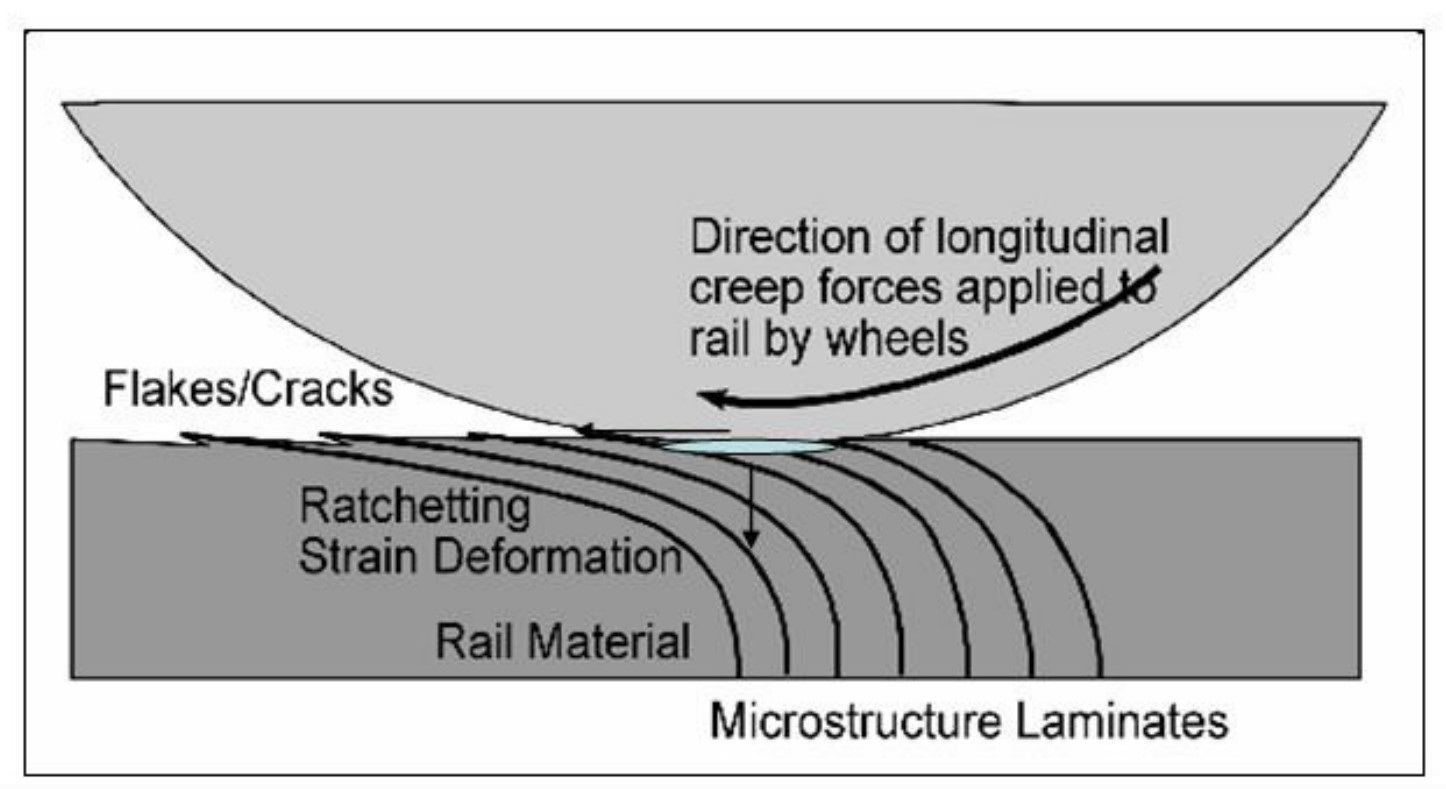
Although the slow repeated rolling contact fatigue from extremely heavy loads differs from the impact of less massive
basalt hammerstones during a multiple meter-lomg impacts on meteoritic iron, many of the surficial features are similar.


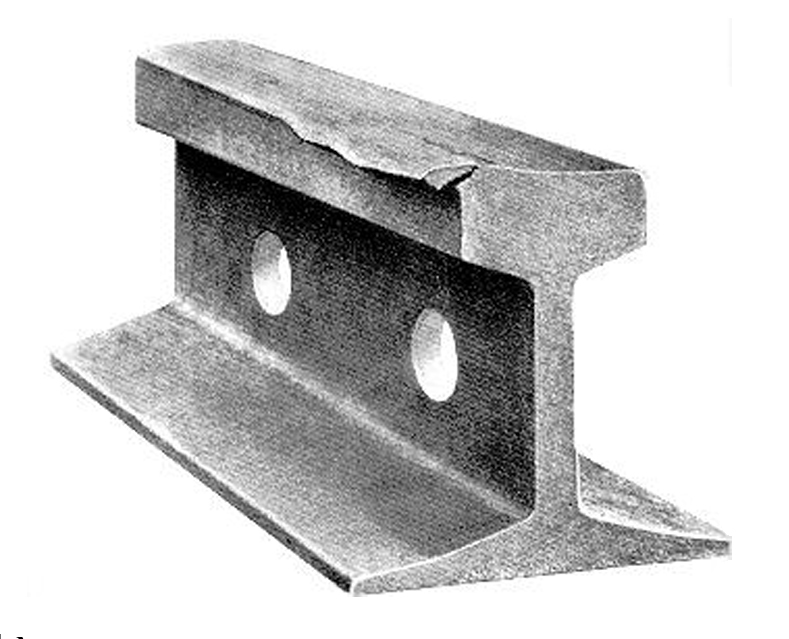
Plastic flow on the head of a railroad track, is similar to the mushrooming on hammers and chisels.
Compressive strikes force the metal outwards to an edge, and over it, forming flakes and curls.
The terminology describing metal failure varies in different publications on rail safety.


Rolling Contact Fatibue produces tension cracks which tear from shear. The cracks grow into flakes.
This suggests that glancing blows may have been more effective than direct blows in mining flakes from meteorites.


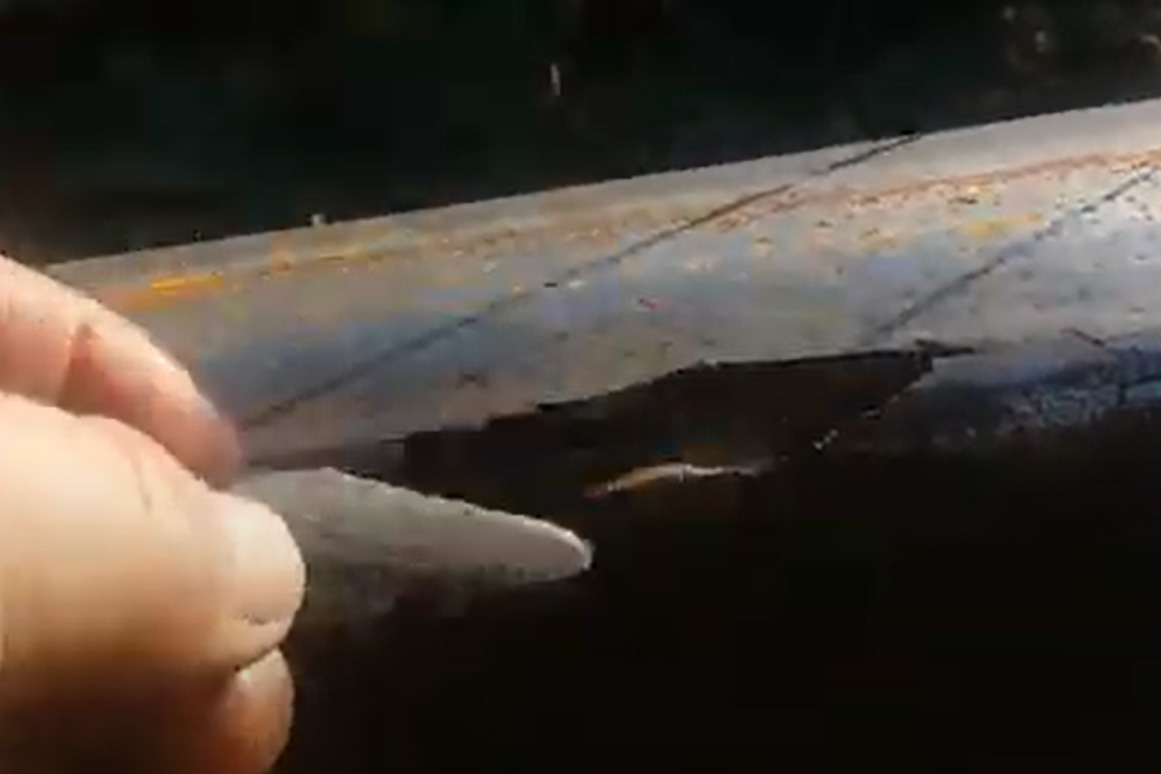
"Shelling' on the head of a rail in the UK. Courtesy of Daniel Pyke.
"Sometimes you get flakes of material and sometimes it is one continuous strip of metal rather than individual flakes.
The latter can pose a hazard as eventually part of the strip is rolled thin enough to break away from the rest of the rail.
As these pieces of metal are very hard, thin and potentially meters long, they risk damaging the underside of the train,
or worse still, penetrating a passenger carriage. As the contact pressure between the train wheel and rail is so high and
concentrated over such a small area (around the size of a small coin), the rail steel despite being very hard, can be
deformed to significant levels. Effectively the surface of the rail becomes cold rolled by the wheels."
Rail 101 - How Rails Die - Daniel Pyke


Plastic flow over an edge on a rail in the UK, producing 20 well-defined flakes. Courtesy of Lindsey Smith.


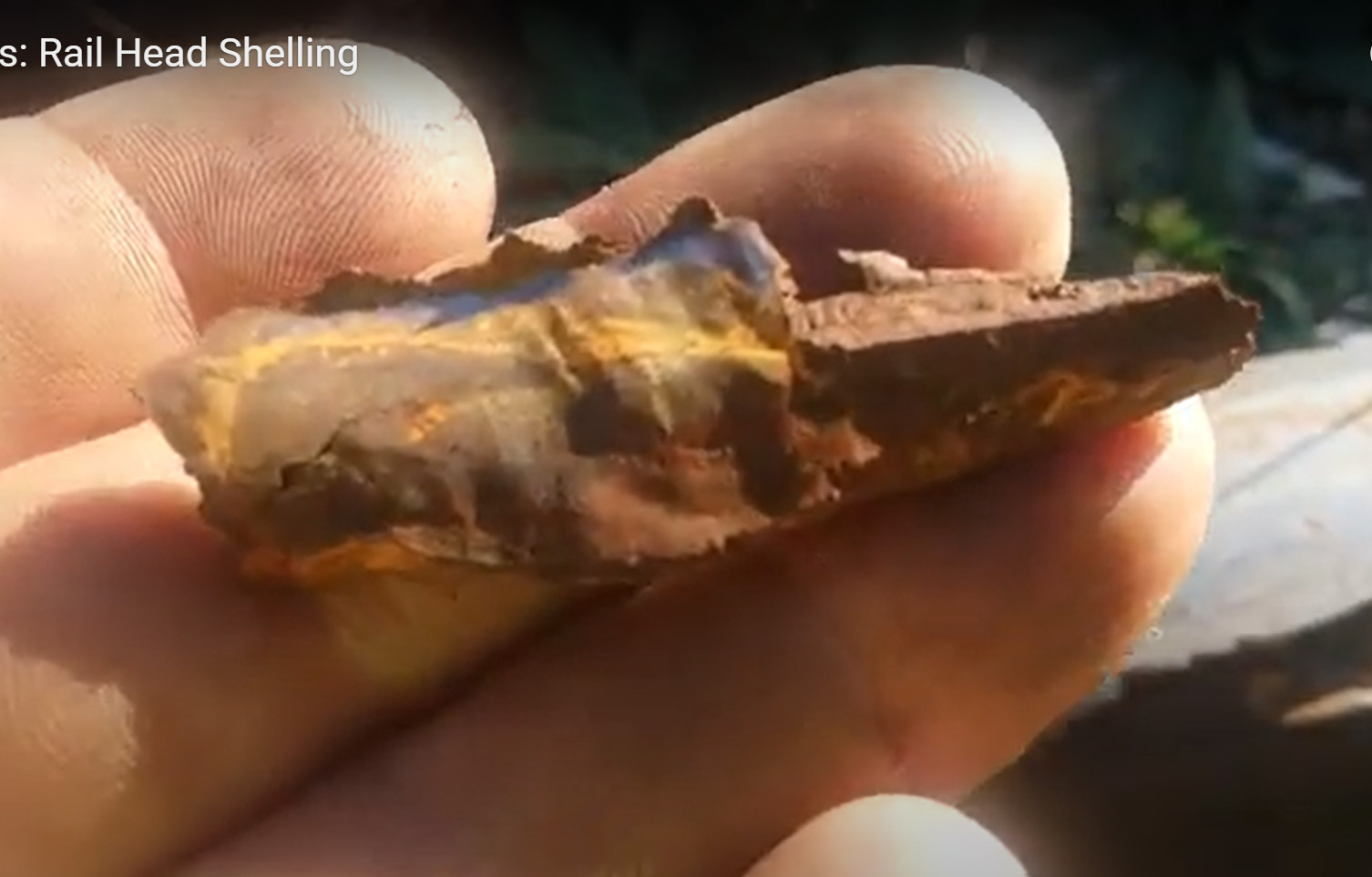
Shelling, as Dave calls it. or perhaps more accuratelly, spalling, courtesy of Dave from his channel "ccrx 6700 That's Railroadin!"
At mile post 8 siding, the Cumbrland Mine Railroad, Waynesburg, Pennsylvania.


Shelling, as Dave calls it. or perhaps more accuratelly, spalling, courtesy of Dave from his channel "ccrx 6700 That's Railroadin!"
At mile post 8 siding, the Cumbrland Mine Railroad, Waynesburg, Pennsylvania.


Plastic Flow from Projectile impacts on Artillery Targets

Although the impact velocities and masses of individual artillery projectiles on military targets greatly excede those of
multiple basalt hammerstone strikes on massive irons, many of the surface details scale well.
In particular, note the lips and flakes produced by the impacts.


German WW2 machine gun turret at Cité d’Alet, St Malo, France, after experimental firing from allied tanks in 1944. (eBay photo)


Plastic Flow from Various Industrial Manufacturing Processes


Spalling on rollers in an industrial plant.


VISIT AGAIN FOR MORE...